























Standing Desk Benefits: Why Your Office Needs a Sit-Stand Desk
Why More Canadian Offices Are Going Sit-Stand
The average Canadian office worker spends around 9 hours per day sitting — at a desk, in meetings, and commuting home. Over time, the effects of all this sitting start to compound: a lower back that stays sore past the weekend, afternoon energy that drops off a cliff, and a worn-down feeling by Friday that sleep doesn't quite fix.
Most people already know that excessive sitting isn't great for our bodies. But there's still a lot of uncertainty about whether the standing desk benefits people talk about are actually real (or whether it's just an expensive piece of office furniture that ends up parked in one position). This article covers what the research and real-world experience actually show: the physical benefits, the productivity impact, and how to set one up so it actually works for you.
Key Takeaways
- Prolonged sitting puts sustained pressure on the lower back and hip flexors — problems that sit-stand desks are specifically designed to help with
- Alternating between sitting and standing throughout the day matters more than total standing time
- Ergonomic setup is critical: desk height, monitor position, and the right accessories all affect how much you actually benefit
- Electric height-adjustable desks make it easy to switch positions without breaking your workflow
- Source Office Furniture carries a full range of sit-stand options for Canadian offices of all sizes
The Physical Benefits of a Standing Desk
Reduced Back Pain and Improved Posture
Lower back pain is one of the most common complaints in office environments and prolonged sitting is a significant, well-known contributor. When you sit for hours at a stretch, the lumbar spine absorbs pressure unevenly, your hip flexors shorten from being held in a contracted position, and the core muscles that would normally help support your spine tend to disengage. The result is that nagging ache that builds steadily through a long workday and doesn't always go away once you get home.
Alternating between sitting and standing takes meaningful pressure off these areas. When you stand, your core re-engages, your hips open up, and your spine has the opportunity to settle into a more neutral alignment. Over time, regularly giving your body a break from prolonged sitting can reduce chronic tightness and the kind of postural strain that builds up across months and years at a desk.
With that said, posture while standing matters just as much as posture while sitting. Hunching over a keyboard while standing, or letting your monitor sit too low, just trades one problem for another.
More Energy, Less Afternoon Slump
If you notice your focus dropping sharply after lunch, too much sedentary time is likely a big part of the equation. Sitting still for extended periods slows circulation, and reduced blood flow has a measurable effect on alertness and mental stamina. The brain needs consistent blood flow to function well, and hours of stillness work against that.
Short standing intervals throughout the day gently activate your muscles, improve circulation, and keep your body in a more engaged state, even when your work is entirely screen-based. The effect isn't dramatic in any single moment, but it adds up across a workday. Many people who make the switch to sit-stand desks report that the afternoon slump becomes less severe and less frequent over time. Not eliminated, but noticeably easier to manage.
The benefits of standing at work aren't about dramatic transformation, they're about what happens when you stop keeping your body locked in the same position for hours at a time.
Encourages Natural Movement
The goal of a height-adjustable desk isn't to stand for hours at a stretch — that creates its own problems. The idea is to break up the pattern of sustained stillness that defines most office workdays.
Small, frequent position changes are what make the real difference. A sit-stand desk makes those micro-movements easy and natural: shifting your weight, raising or lowering the surface, stepping back briefly to stretch. Rather than relying on willpower to remember to move more, the desk gives you a built-in mechanism to do it. Over a few weeks, that pattern tends to become habitual and most people find they start switching positions without really thinking about it.
Potential Long-Term Health Benefits
Beyond day-to-day comfort, reducing total sitting time has broader associations with metabolic health, including blood sugar regulation, cardiovascular function, and energy metabolism. The evidence in this area continues to grow, and the picture is encouraging.
It's worth being clear: a standing desk isn't a replacement for regular exercise or an active lifestyle outside of work. But as one consistent piece of a healthier daily routine, using a sit-stand desk is a meaningful step. Think of it as one good habit that stacks with the others, not a substitute for them.
Standing Desks and Workplace Productivity
Improved Focus and Alertness
Better circulation doesn't just affect how your body feels, it affects how your brain works. When circulation improves and your body is more physically engaged, your brain follows. Standing during mentally demanding tasks, long video calls, or stretches of deep focus can help sustain concentration in a way that sitting still for hours often doesn't.
This is one of the more underrated standing desk productivity benefits in an office setting. The effect is subtle on any given day, but it compounds. People who feel more physically alert tend to think more clearly and stay on task longer, and that compounds across a week.
Better Collaboration and Engagement
In an open-plan office, there's a quiet dynamic most people will recognize: when everyone is seated behind their monitors, the threshold for a quick question or informal conversation goes up. Something about being eye-level with a screen makes people less reachable.
Sit-stand desks shift that dynamic. When someone is working at standing height, they're more visible and more naturally approachable, which makes a quick question or side conversation feel easy rather than disruptive. Standing workstations also tend to reduce the tendency to disappear behind a monitor, making it easier to stay connected with what's happening around you without sacrificing focused work time.
A More Energized Team Culture
Energy dips aren't just an individual problem — when they hit most of the team at the same time, they affect the mood and momentum of the whole office. The post-lunch slump, the 3pm drift, the general drag toward the end of the week: all of these are amplified when sitting all day is the default.
Providing sit-stand options is a visible signal that a company's commitment to employee wellbeing goes beyond a line in the employee handbook. For HR leads and office managers making a case to leadership, it's a practical argument that tends to land well with leadership. Sit-stand desks aren't just an ergonomic accessory, they're an investment in a workplace where people actually feel good while they work.
How to Get the Most Out of Your Standing Desk
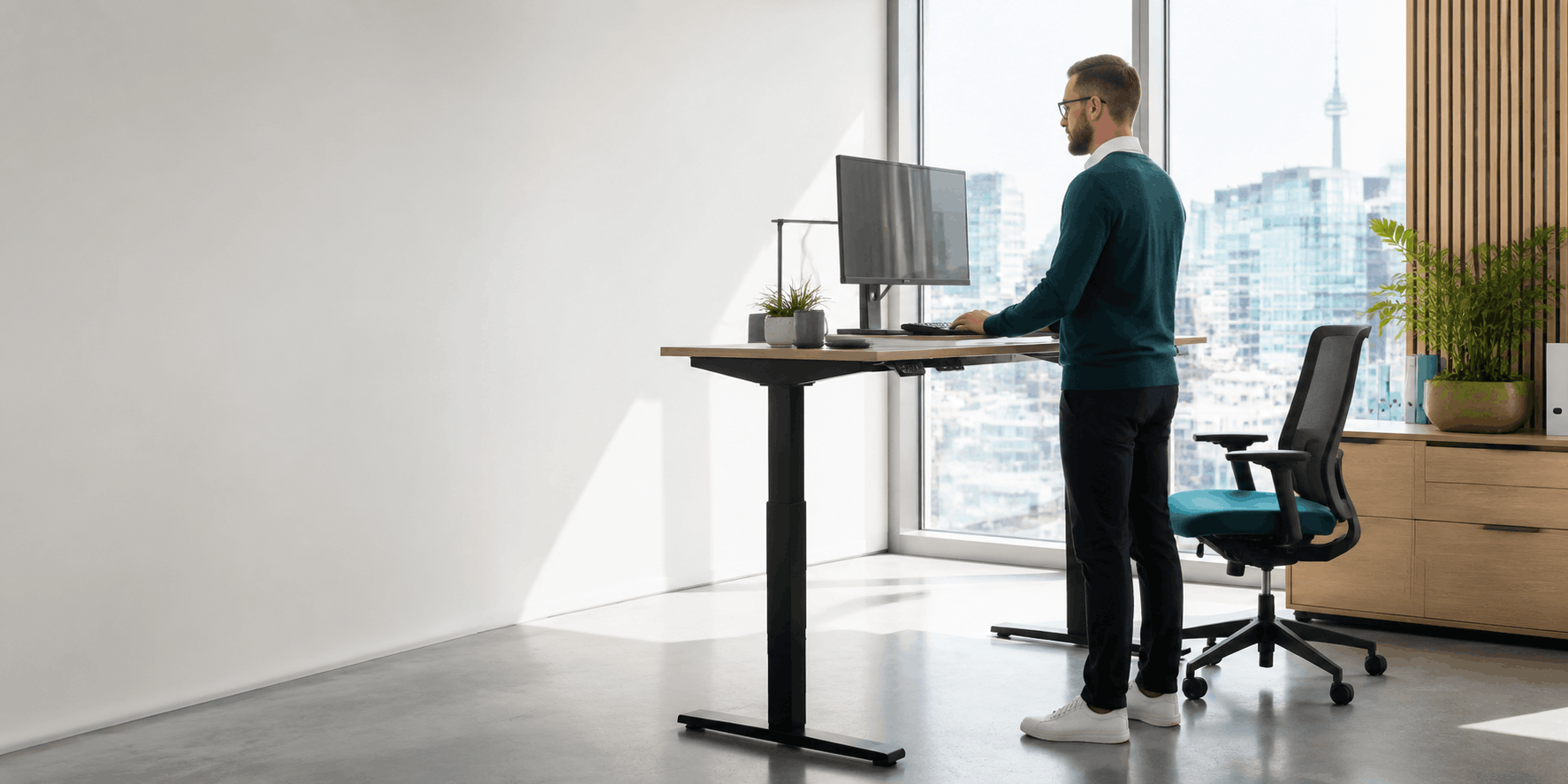
A sit-stand desk works best when it's set up correctly and used consistently. Here's what makes the biggest difference:
- Alternate throughout the day. Research suggests that a roughly 1:1 or 2:1 sit-to-stand ratio supports both comfort and productivity. How often you switch matters more than total standing time. Aim to change positions every 30–60 minutes rather than committing to a long unbroken stretch of either.
- Set the correct desk height for both positions. When sitting, your elbows should rest at roughly a 90° angle with your forearms flat on the desk surface. When standing, the same principle applies — shoulders relaxed, not raised. Your monitor height should keep your eye line at or just below the top of the screen in both positions. Electric desks with memory presets let you dial in your exact heights once and switch between them instantly.
- Pair with a monitor arm. This is one of the most commonly overlooked accessories when transitioning to a sit-stand setup. A monitor that stays fixed to the desk can't properly follow you through height changes, which means awkward viewing angles in one position or the other. A monitor arm lets you set the screen exactly where it needs to be for each mode.
- Use an anti-fatigue mat. Standing on a hard floor for extended periods creates its own fatigue — particularly in the feet, calves, and lower back. An anti-fatigue mat provides cushioning and naturally encourages you to shift your weight. If you're setting up a new sit-stand workstation, add this from day one.
- Build up gradually. If you're new to standing at a desk, don't try to stand for hours in the first week. Start with 15–20 minute intervals and increase over time. Your body adapts, and so do your habits — give both the time they need.
Is a standing desk worth it? For most office workers and teams, the answer is yes, not because it solves every problem, but because it removes a consistent source of physical strain and mental drag that most people have simply learned to live with. Better posture, steadier energy, sharper focus, and a more engaged team — these aren't promises, they're what people actually report once a sit-stand desk becomes part of how they work.
Browse our height-adjustable desk collection online, or visit a Source location near you to see them in person.