






















L-Shaped Desks vs. Straight Desks: Which Is Right for Your Office?
Your desk is probably the piece of furniture you spend the most time at. Get it wrong and you're constantly working around it — shuffling papers off the edge, cramming a second monitor into an awkward spot, or sitting in a layout that doesn't suit how you actually work. Get it right and it mostly disappears into the background, which is exactly what good office furniture should do.
For most people, the l-shaped desk vs straight desk question is where the decision starts. Both are practical and widely used but they suit different spaces and different working styles. This guide covers what sets them apart, the pros and cons of each, and how to figure out which one actually fits your office.
Understanding the Basics: L-Shaped and Straight Desks
What Is a Straight Desk?
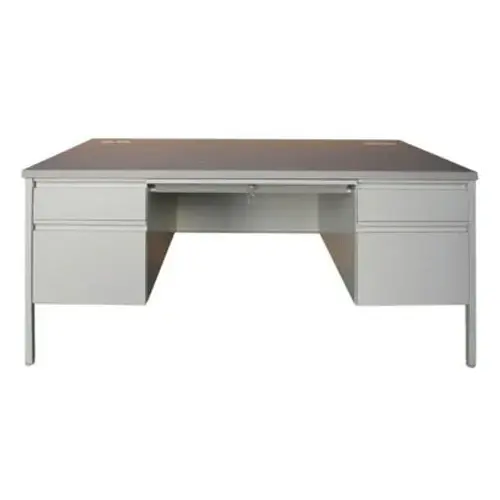
A straight desk is a single rectangular work surface, typically ranging from 48 to 72 inches wide. It's the most common desk configuration in both home and commercial offices — easy to move, easy to fit into most spaces, and available at every price point. If you picture a standard office desk, this is it.
What Is an L-Shaped Desk?
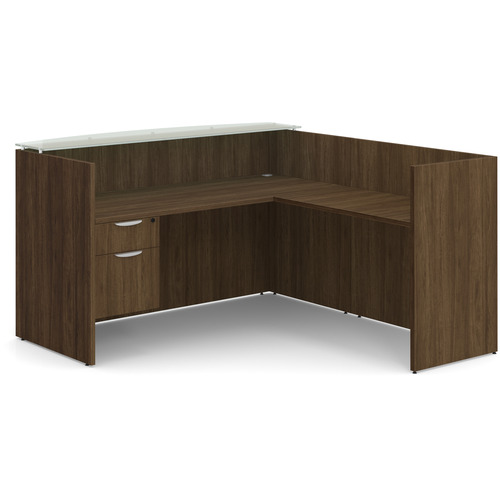
An L-shaped desk connects two work surfaces at a 90-degree angle, creating a corner configuration. The combined surface area is significantly larger, usually 120 to 180 inches in total, and the layout makes use of corner space that would otherwise sit empty. L-shaped desks are popular with anyone who works across multiple monitors, regularly switches between different types of tasks, or simply needs more room to spread out without the desk taking over the entire room.
At a Glance: How They Compare
Pros and Cons: L-Shaped vs. Straight Desks
Advantages of a Straight Desk
- Takes up less room. A straight desk fits almost anywhere: against a wall, in a narrow room, or in a shared office where floor space is limited.
- Easy to move and reconfigure. If you rearrange your workspace often or expect to move, a straight desk is far easier to handle than an L-shaped one.
- Lower cost. At the same quality level, straight desks are generally less expensive.
- Less visual weight. In a smaller room, a straight desk keeps the space from feeling closed in.
Disadvantages of a Straight Desk
- Limited surface area. Two monitors, a laptop, some paperwork, and a coffee can have a straight desk feeling cluttered fast. If your work regularly requires more than one thing on your desk at a time, you'll notice the constraint.
- Everything shares the same surface. There's no natural way to separate computer work from other tasks, which can make it harder to stay organized.
Advantages of an L-Shaped Desk
- More room to work. The extra surface area isn't just about monitors, it gives you space for notes, reference materials, equipment, or simply breathing room.
- Makes use of corner space. Corners tend to be wasted in most offices. An L-shaped desk makes great use of your space as a whole.
- Natural task separation. Most people naturally use one side for their computer and the other for writing, calls, or secondary tasks. That division tends to keep things organized without much extra effort.
- Comfortable for dual-monitor setups. Two screens fit without the desk feeling crowded, and the corner position often puts both monitors at a better viewing angle.
Disadvantages of an L-Shaped Desk
- Needs more floor space. You'll want at least a 10x10 foot room to fit an L-shaped desk comfortably along with enough clearance to move around it.
- Harder to move or reposition. Moving an L-shaped desk usually means partial disassembly. It's a two-person job at minimum, and not something you'll want to have to do often.
- Can feel oversized in a compact space. If the room is small, a large L-desk can make the whole office feel more cramped rather than more functional.
Choosing the Right Desk for Your Office
Consider Your Space First
Before you start comparing models, measure the room. Specifically:
- Note the overall dimensions and the location of doors, windows, and electrical outlets
- Factor in traffic flow — you need at least 36 inches of clearance behind your chair to move comfortably
- Check whether you have an available corner, and whether it's actually practical to use (some corners have outlets, vents, or fixtures that complicate things)
If your office is under 100 square feet, a straight desk is the safer choice. An L-shaped desk in a tight space creates layout problems that tend to outweigh the extra surface area.
Think About How You Actually Work
This is actually where the decision lives for most people. Ask yourself what's on your desk on a normal day. One monitor and a notebook? A straight desk handles that easily. Two monitors, a laptop dock, a notepad, and a stack of files you're working through? An L-shaped desk earns its footprint.
A few other questions worth thinking through:
- Do you switch between different types of tasks throughout the day, or is your work mostly screen-based and focused?
- Do you take calls at your desk that require notes or reference materials nearby?
- How often do you move or rearrange your office setup?
If the answer to that last question is "regularly," lean toward a straight desk. L-shaped desks aren't difficult to assemble, but repositioning them is a project.
Budget and Materials
Both desk types are available across a wide price range, but the materials make a bigger difference than most people expect.
Laminate over a solid core is the most practical surface for everyday office use, it's durable, easy to clean, and available in a range of finishes. Solid wood holds up well over time and looks better with age, but costs significantly more. Metal frames tend to outlast wood frames and are worth the investment if the desk is going to see heavy or long-term use.
For straight desks, good quality starts around $200–$400. For L-shaped desks, budget at least $500–$700 for something that holds up, and even more for height-adjustable versions. One thing to watch with cheaper L-shaped desks: the corner joint is where most of the structural stress goes, and it's also where budget models tend to cut corners (literally). Spending a bit more on a solidly built L-desk is usually worth it.
FAQs: L-Shaped vs. Straight Desks
The Bottom Line
The best desk is the one that fits how you actually work, not the one that looks most impressive in a product listing.
A straight desk is the right choice if your office is compact, your work is mostly screen-based and focused, and you want something easy to move or reconfigure. An L-shaped desk makes sense if you have the floor space, work across multiple tasks or monitors, and want a layout that keeps different types of work separated without extra effort.
Ready to upgrade your workspace? Browse our curated selection of L-shaped and straight desks at Source Office Furniture — and if you're not sure where to start, visit a location near you to see them in person.